
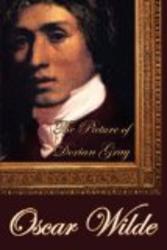

| Author | Oscar Wilde |
| Format | Hardcover |
| ISBN | 9781934169544 |
| Publication Date | 18/02/2007 |
| Publisher | Norilana Books |
| Manufacturer | Norilana Books |
The Picture of Dorian Gray by Oscar Wilde is a masterpiece of aestheticism and a moral parable. Dorian Gray is a young man of impossible physical beauty whose portrait -- painted by the artist Basil Hallward -- becomes connected on an occult level with the workings of his soul. Drawn into a corrupt and sensual life by the dissolute Lord Henry Wotton, Dorian remains young and beautiful, while the painting ages in his stead, ultimately becoming a monstrosity.
Interwoven throughout is the author's brilliant commentary on beauty, art, love, and always, stunning wit.
A lush, cautionary tale of a life of vileness and deception or a loving portrait of the aesthetic impulse run rampant? Why not both? After Basil Hallward paints a beautiful, young man's portrait, his subject's frivolous wish that the picture change and he remain the same comes true.
Dorian Gray's picture grows aged and corrupt while he continues to appear fresh and innocent. After he kills a young woman, "as surely as if I had cut her little throat with a knife," Dorian Gray is surprised to find no difference in his vision or surroundings. "The roses are not less lovely for all that.
The birds sing just as happily in my garden." As Hallward tries to make sense of his creation, his epigram-happy friend Lord Henry Wotton encourages Dorian in his sensual quest with any number of Wildean paradoxes, including the delightful "When we are happy we are always good, but when we are good we are not always happy." But despite its many languorous pleasures, The Picture of Dorian Gray is an imperfect work.
Compared to the two (voyeuristic) older men, Dorian is a bore, and his search for ever new sensations far less fun than the novel's drawing-room discussions. Even more oddly, the moral message of the novel contradicts many of Wilde's supposed aims, not least "no artist has ethical sympathies. An ethical sympathy in an artist is an unpardonable mannerism of style." Nonetheless, the glamour boy gets his just deserts.
And Wilde, defending Dorian Gray, had it both ways: "All excess, as well as all renunciation, brings its own punishment."
 Related Products
Loading similar products...




Stay informed about the best deals and price drops. Choose which notifications you'd like to receive from PriceCheck.

Free easy-to-follow course for anyone in South Africa who wants to learn how to start a digital business.

