Sign in with Google
Or, sign in using email/password
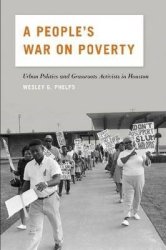
In A People's War on Poverty, Wesley G. Phelps investigates the on-the-ground implementation of President Lyndon Johnson's War on Poverty during the 1960s and 1970s. He argues that the fluid interaction between federal policies, urban politics, and grassroots activists created a significant site of conflict over the meaning of American democracy and the rights of citizenship that historians have largely overlooked.
In Houston in particular, the War on Poverty spawned fierce political battles that revealed fundamental disagreements over what democracy meant, how far it should extend, and who should benefit from it. Many of the programme's implementers took seriously the federal mandate to empower the poor as they pushed for a more participatory form of democracy that would include more citizens in the political, cultural, and economic life of the city.
At the centre of this book are the vitally important but virtually forgotten grassroots activists who administered federal War on Poverty programmes, including church ministers, federal programme volunteers, students, local administrators, civil rights activists, and the poor themselves. The moderate Great Society liberalism that motivated the architects of the federal programmes certainly galvanised local antipoverty activists in Houston.
However, their antipoverty philosophy was driven further by prophetic religious traditions and visions of participatory democracy and community organising championed by the New Left and iconoclastic figures like Saul Alinsky. By focusing on these local actors, Phelps shows that grassroots activists in Houston were influenced by a much more diverse set of intellectual and political traditions, fueling their efforts to expand the meaning of democracy.
Ultimately, this episode in Houston's history reveals both the possibilities and the limits of urban democracy in the twentieth century. Review: Wesley G. Phelps s A People s War on Poverty is an important contribution to the growing historical literature about the antipoverty crusade at the local level.
The focus is on Houston, one of the most understudied cities in the South, and on the grassroots activists who fought there. . . . In addition to being an important piece of historical scholarship, this well-written book will easily find its way into college classes on the War on Poverty, the long civil rights movement, and the rise of late twentieth-century conservatism.
It also takes its place in the growing and stimulating literature on post World War II Texas.--Robert Korstad Journal of American History
 Related Products
Loading similar products...

Stay informed about the best deals and price drops. Choose which notifications you'd like to receive from PriceCheck.


