
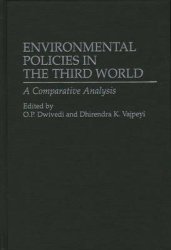

Analyzes environmental problems and policies in developing countries around the world and discusses new prospects for international cooperation and funding. Considers hard political choices, who is to blame for environmental decay, who should pay to overcome problems, and how policies should be administered.
Experts from different countries offer their perspectives about the role of multilateral agencies, the North-South dimensions of environmental problems since 1972, internal and external factors that have affected Third World development, new measures and opportunities since the Rio Summit conference, and case studies of representative countries-India, China, Indonesia, Africa, Nigeria, Chile, and Mexico.
A bibliography enhances this authoritative study for the use of political scientists, economists, and public administrators, for teachers, students, and professionals. Review: ?n this anthology, editors O.P. Dwivedi and Dhirendra K. Vajpeyi present sound analyses of national-level environmental policy in several Third World countries: India, China, Indonesia, Nigeria, Chile, and Mexico...The study of comparative environmental politics and policies promises many rewards: clear lessons and models that could save fledgling environmental agencies from painful mistakes; greater understanding of domestic positions in international environmental negotiations; and dependable regulatory information relevant to foreign investors.... the book provides fertile ground for the new field of comparative environmental politics.?-Environment
 Related Products
Loading similar products...




Stay informed about the best deals and price drops. Choose which notifications you'd like to receive from PriceCheck.

Free easy-to-follow course for anyone in South Africa who wants to learn how to start a digital business.

