
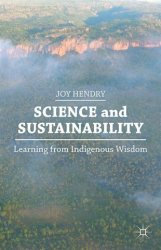

Indigenous science is often dismissed as quackery or nonsense, out of touch with progress and current events. However, Indigenous peoples have passed down vital information for generations, from which local plants help cure common ailments, to which parts of the land are unsuitable for buildings because of likely earthquakes.
These scientific practices that have been developed by Indigenous peoples around the world have been largely ignored by Western colonizers in their lands. From Japan and New Zealand to Australia and Canada, Indigenous science involves environmentally-focused, sustainable practices that allow people to live with the land rather than in spite of it.
Here, Hendry examines science through these Indigenous roots, problematizing the idea that Western science is the only type that deserves that name and drawing attention to some of its shortcomings. She takes the reader with her on the learning process and shares a myriad of sustainable examples that can be put into practice.
Review: Science and Sustainability offers hope for the planet. Hendry argues that the traditions of the world's indigeneous peoples can help us to tackle the many global problems that face us and help to build a sustainable world. - David Peat, Director of the Pari Center for New Learning, Italy and author of Blackfoot Physics Joy Hendry argues that Western science alone cannot ensure sustainable living for the future.
In this fascinating, thought-provoking, and very readable study, based upon years of meticulous original research, she invites us to redefine our concept of 'science' in a way that can incorporate insights drawn from many cultures around the globe. She suggests that such a co-operative approach to solving the world's problems is the best way forward. - Allan Chapman, Historian of Science, Oxford University, UK Drawing on extensive fieldwork, Joy Hendry provides an insightful and engaging account of the knowledge developed by indigenous communities and the ways in which it continues to underpin cultural practice in societies all around the world.
Science and Sustainability is a must for anyone interested in the history, definition, study, and representation of science. - Marcel Vellinga, author of Constituting Unity and Difference: Vernacular Architecture in a Minangkabau Village (2004) Science and Sustainability offers hope for the planet. Hendry argues that the traditions of the world's indigeneous peoples can help us to tackle the many global problems that face us and help to build a sustainable world. - David Peat, Director of the Pari Center for New Learning, Italy and author of Blackfoot Physics Joy Hendry argues that Western science alone cannot ensure sustainable living for the future.
In this fascinating, thought-provoking, and very readable study, based upon years of meticulous original research, she invites us to redefine our concept of 'science' in a way that can incorporate insights drawn from many cultures around the globe. She suggests that such a co-operative approach to solving the world's problems is the best way forward. - Allan Chapman, Historian of Science, Oxford University, UK Drawing on extensive fieldwork, Joy Hendry provides an insightful and engaging account of the knowledge developed by indigenous communities and the ways in which it continues to underpin cultural practice in societies all around the world.
Science and Sustainability is a must for anyone interested in the history, definition, study, and representation of science. - Marcel Vellinga, author of Constituting Unity and Difference: Vernacular Architecture in a Minangkabau Village (2004)
 Related Products
Loading similar products...




Stay informed about the best deals and price drops. Choose which notifications you'd like to receive from PriceCheck.

Free easy-to-follow course for anyone in South Africa who wants to learn how to start a digital business.

