Sign in with Google
Or, sign in using email/password

| Manufacturer | Unbranded |
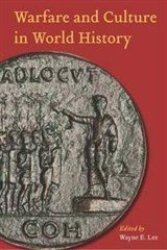
It has long been acknowledged that the study of war and warfare demands careful consideration of technology, institutions, social organization, and more. But, for some, the so-called war and society approach increasingly included everything but explained nothing, because it all too often seemed to ignore the events on the battlefield itself.
The military historians in Warfare and Culture in World History return us to the battlefield, but they do so through a deep examination of the role of culture in shaping military institutions and military choices. Collected here are some of the most provocative recent efforts to analyze warfare through a cultural lens, drawing on and aggressively expanding traditional scholarship on war and society through sophisticated cultural analysis.
With chapters ranging from an organizational analysis of American Civil War field armies to the soldiers' culture of late Republican Rome and debates within Ming Chinese officialdom over extermination versus pacification, this one volume provides a full range of case studies of how culture, whether societal, strategic, organizational, or military, could shape not only military institutions but also actual battlefield choices.
Contributors: Lee L. Brice, Mark Grimsley, Isabel V. Hull, Wayne E. Lee, Adrian R. Lewis, John A. Lynn II, Sarah C. Melville, David Silbey, and Kenneth M. Swope Wayne E. Lee is Professor of History at the University of North Carolina at Chapel Hill. His books include Barbarians and Brothers: Anglo-American Warfare, 1500-1865 and Empires and Indigenes: Intercultural Alliance, Imperial Expansion, and Warfare in the Early Modern World (NYU Press).
Review: Provides the best introduction yet published to the wide and exciting study of war and culture. Readers interested in war, culture, and their roles in global history will find here some of the best current research and writing on the topic. Michael S. Neiberg, author of Dance of the Furies Lee Brice offers an interesting account of Roman military culture under Octavian, emphasizing, in particular, the role of discipline.
Organizational culture therefore emerges as crucial to success. Kenneth Swope continues his important work on late Ming warfare and military culture, focusing on anti-rebel strategy and the problems created by simultaneous conflict with the Manchu. - Jeremy Black, War in History, January 2013
 Related Products
Loading similar products...

Stay informed about the best deals and price drops. Choose which notifications you'd like to receive from PriceCheck.


