

| Manufacturer | Palgrave Macmillan |
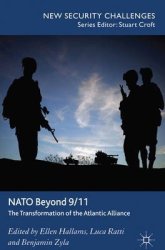
This volume brings together leading scholars from both sides of the Atlantic to examine the significance of 9/11 for the transformation of the Atlantic Alliance over the last decade. Blending international relations, political science, IR theory and history, it asks whether 9/11 represents a major transformative event for an alliance that was still grappling with the implications of the end of the Cold War.
Examining key topics such as the alliance's wars in Afghanistan, its military operation in Libya, global partnerships, new security challenges, burden-sharing and relations with the US, Russia and other key actors, it offers a unique insight into the alliance's evolution since 2001. This comprehensive collection will appeal to scholars in political science, international and transatlantic relations, security studies and US and European foreign policy.
Its contributors include Tim Bird, Sven Biscop, Magnus Christiansson, Alan Dobson, Trine Flockhart, Bastian Giegerich, Carl Cavanagh Hodge, Steve Marsh, Jeffrey H. Michaels, Magnus Petersson, Michael Ruhle, Terry Terriff and Mark Webber. Review: 'For much of its existence, NATO had a very clear deterrence mission which did not oblige it to move around very much.
However, in more recent times, the Alliance has taken on a broad range of missions and in many different parts of the world. Arguably, these missions, extending from ground operations in Afghanistan to maritime operations in the Mediterranean and Gulf, and involving cooperation with a large number of partner countries from across the globe, have made NATO an even more visible and important organization than it was during the Cold War.
Yet as NATO's mission in Afghanistan winds down, and as the European Allies confront major defence cuts and a shift of attention by the US to the Asia Pacific, can NATO remain a global actor? Do the enduring strengths of the Alliance continue to outweigh the many challenges it faces in adapting to the new spectrum of 21st century security threats, such as cyber attacks, terrorism, or the proliferation of weapons of mass destruction?
Do the Allies have the political will and capabilities to address these issues together? As the debate on NATO's future gets under way, this book is the essential guide for anyone - whether policy maker, practitioner or student - who wants to understand where the Alliance is today and where it will be in the future.' - Jamie Shea, NATO Deputy Assistant Secretary General for Emerging Security Challenges NATO's capacity for change is once again on the agenda now that its engulfing and prolonged combat mission in Afghanistan is about to end.
This timely and important book traces the wider effects of the September 2001 terrorist attacks on the Alliance and how its future remains intimately tied to its past. It masterfully combines reflections on 'big change' with insights into NATO policy issues and is certain to provoke new thinking on the Alliance. - Sten Rynning, University of Southern Denmark
 Related Products
Loading similar products...




Stay informed about the best deals and price drops. Choose which notifications you'd like to receive from PriceCheck.

Free easy-to-follow course for anyone in South Africa who wants to learn how to start a digital business.

