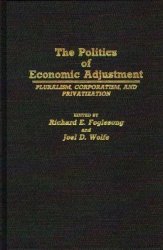
Privatization and corporatism along with pluralist forms of adaptation have received much attention as strategies for coping with the transformation of mature industrial economics. Yet, the burgeoning literature on this topic has, until now, lacked an adequate account of the determinants of a government's choice between such strategies or of the relationships between these strategies and the Keynesian economic framework that predominated in the postwar era.
This groundbreaking study bridges these gaps by considering both the determinants of the choice of an adjustment strategy and how that choice affects the nature of liberal democracy. Written by a distinguished group of political scientists, the essays collected here examine the divergent responses of liberal capitalist nations to the problem of economic adjustment, giving special attention to the political factors affecting strategic choices aimed at bolstering employment, enhancing international competitiveness, and restoring healthy productivity rates.
The contributors examine in depth the experiences of the United States, Britain, France, West Germany, and Italy. They explain how these advanced industrial nations have faced economic crisis differently and why they have responded as they have. In each case, the author focuses on whether and at what level the state has pursued a corporatist approach involving a more direct government role in managing the economy with the assistance of private interest groups, a privatization strategy involving less state intervention and an increased reliance on market processes, or a form of pluralist adaptation.
Throughout, the contributors demonstrate that the strategy pursued can have a fundamental impact on the character of democracy and the patterns of policy making. Students of political science as well as policy makers will find this book an incisive discussion of the myriad factors influencing the choice among competing strategies of economic adjustment.
Review: ?Nine selections, building on the literature on privatization and corporatism, focus on 'both the determinants of choice of an adjustment strategy and how that choice affects the nature of liberal democracy' in the face of economic decline and increasing international economic interdependence.
Case studies of the United States, Great Britain, France, West Germany, and Italy are examined to explain their choice of industrial policy, taking into account differences in the setting and problems these economies face. Concludes with a section characterizing possible forms of democracy and relating these to adjustment strategies, enumerating 'the diverse ways in which capitalism and liberal democracy can be combines.'?-Economic Books




 Related Products
