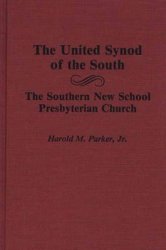
In histories of American Presbyterianism, the southern branch of the New School Church has received little attention despite its importance to church history as a whole. This new study provides a complete account of the southern church, tracing the events and controversies that led to schism, the founding of the United Synod, and eventual reunification with the Old School, South.
The author begins by reviewing the causes of the original and Old School-New School schism of 1837-1838 and the circumstances that gradually deepened the separation between the northern and southern wings of the New School. The emergence of United Synod of the South and its activities in the antebellum period and during the Civil War are considered next.
The author concludes with a discussion of the final union with the Southern Presbyterian Church in 1864 and assesses the reasons why the southern New School/United Synod failed to grow and reach the potential of other Presbyterian churches of that day. Review: Harold M. Parker, Jr., carefully chronicles the formal history of the body that formed in 1857 as the majority in the New School Presbyterian General Assembly moved to discipline slaveowners.
Southerners, about 10 percent' (p. 291) of the membership, feeling betrayed and isolated in the process, separated from that denomination. Approximately sixteen thousand left the New School Presbyterian Assembly, and most of those joined in forming briefly a synod that finally merged with the Presbyterian Church in the Confederate States of America.
Parker reviews the literature on the New School Presbyterians, details the crucial 1856 and 1857 assemblies, tells of proslavery thought as it developed in the South, and describes many of the leaders among the Southern New Schoolers. He also explains something of the dilemma of synod members immediately before and during the Civil War.
Of note were the continuing interest in domestic and foreign missions among Presbyterians besieged by local problems of identity and survival, the care for some educational institutions, and the ambiguity felt by many about the formation of a separate nation. . . . [H]e does deliver as usual an accurate and meticulous narrative of subject.
Obviously sympathetic to the plight of this minority group, he also keeps some distance for critique and reflection. The book deserves reading by those concerned with understanding the period and those interested in knowing why the fissures among the United States developed when they did and how they did. -Journal of Southern History




 Related Products
