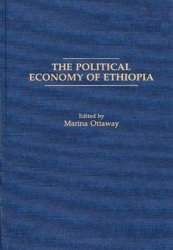
The essays collected here evolved from a two-day conference on Ethiopia held at the Johns Hopkins School for Advanced International Studies. Written by both academics and Ethiopians who have participated personally in the events they discuss, the papers describe and interpret the Ethiopian revolution and explore its successes, failures, and intrinsic qualities.
The contributors express a variety of viewpoints and approaches to the current crisis situation in Ethiopia, demonstrating that although the 15-year revolution has failed to measurably improve the lot of Ethiopians, Ethiopia's history, demographics, and climate have also been important contributing factors.
A number of articles deal with aspects of the political crisis while others analyze the economic crisis, looking at present problems and their historical roots. Taken together, these essays make a major contribution to our understanding of the persistent problems faced by Ethiopia today. Following the editor's introduction, the volume is divided into three sections.
In Part I, four papers explore the Ethiopian state and the problem of power. Individual chapters examine such issues as change and continuity in Ethiopian politics, decisions and elections, and the question of rural transformation. Part II looks at different facets of the national question, now or in the past--the character of the leadership, the concept of government, and the decision-making process.
The third section analyzes the current economic crisis in two papers which discuss Ethiopia's agricultural crisis and development strategy. The concluding chapter presents an overall perspective on revolution, nationality, and the Ethiopian state. Students of political economy, African studies, and economic development will find The Political Economy of Ethiopia illuminating reading.
Review: ?Ottaway, a leading specialist on Ethiopia, has edited this volume based on a conference held at Johns Hopkins University. She gives a staggering delineation of the problems of state formation in Ethiopia, focusing on boundary disputes around the turn of the century, on Ethiopia's insistence on holding on to Eritrea after WW II, on Ethiopia's lack of democracy, and on its inability to maintain law and order.
She points out that Ethiopia faces all of these problems at once and that the military revolution of 1974 has not been able to remedy any of these conflicts or the additional problems of the economy. Leading specialists tell this dismal story in 11 chapters; five articles deal with the Ethiopian state, the revolution and society, and politics.
The problem of the national question is covered in four chapters, and development and agriculture is treated in two chapters. The quality of the contributions varies, but taken together the volume represents a valuable analysis of a complex subject. In the final chapter on Revolution, Nationality, and the Ethiopian State, Clapham concludes on the ironical note that mobilizational Leninism has given political rivals in the state the organizational capacity to resist the political center.
Recommended for college libraries and especially for research collections.?-Choice




 Related Products
