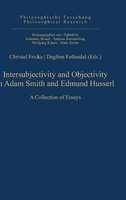
Can we have objective knowledge of the world? Can we understand what is morally right or wrong? Yes, to some extent. This is the answer given by Adam Smith and Edmund Husserl. Both rejected David Hume's skeptical account of what we can hope to understand. But they held his empirical method in high regard, inquiring into the way we perceive and emotionally experience the world, into the nature and function of human empathy and sympathy and the role of the imagination in processes of intersubjective understanding.
The challenge is to overcome the natural constraints of perceptual and emotional experience and reach an agreement that is informed by the facts in the world and the nature of morality. This collection of philosophical essays addresses an audience of Smith- and Husserl scholars as well as everybody interested in theories of objective knowledge and proper morality which are informed by the way we perceive and think and communicate.
Loading similar products...
Stay informed about the best deals and price drops. Choose which notifications you'd like to receive from PriceCheck.
Free easy-to-follow course for anyone in South Africa who wants to learn how to start a digital business.