Sign in with Google
Or, sign in using email/password

| Manufacturer | Greenwood Press |
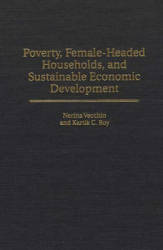
This book examines female-headed households (FHHs) in the world economy, aspects of their poverty, and the implications of those for sustainable development. Following a general discussion of FHHs in the world community, the work discusses FHHs in two regions of India, one being an example of unsuccesssful development and the other of successful development.
The research is based on fieldwork in five rural villages. One village, comprising mostly female-headed households, provided a unique case study. The other four villages include both male- and female-headed households with a high proportion of female-headed households. The authors found that female-headed households dominate the poorer sections of the community, and women's access to resources is limited by cultural, social, and economic influences.
Women, particularly those in FHHs, bear the heaviest burdens in times of economic hardship. These women face more forms of discrimination outside the home than women from male-headed households. They have fewer customary rights but greater freedom of movement and more opportunities for paid employment.
The authors go on to show that the benefits of government development programs have not reached remote areas. The trickle-down approach has not worked, but sustainable development programs focusing on women's development and self-responsiblity have helped to lift the economic status of women in general and FHHs in particular.
Review: ?The results of this approach are useful, especially in breaking down the perceived homogeneity of women often assumed in the gender and development literature....Vecchio and Roy provide very specific answers to the question of which issues will have to be addressed in the design of such policy.
Their book will therefore be of interest to policymakers as well as scholars.?-Journal of Third World Studies
 Related Products
Loading similar products...

Stay informed about the best deals and price drops. Choose which notifications you'd like to receive from PriceCheck.


