Sign in with Google
Or, sign in using email/password
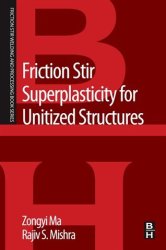

This book describes the fundamentals and potential applications of 'friction stir superplasticity for unitized structures'. Conventional superplastic forming of sheets is limited to the thickness of 3 mm because the fine grained starting material is produced by rolling. Friction stir superplasticity has grown rapidly in the last decade because of the effectiveness of microstructural refinement.
The thickness of the material remains almost constant, and that allows for forming of thick sheets/plates, which was not possible before. The field has reached a point where designers have opportunities to expand the extent of unitized structures, which are structures in which the traditional primary part and any supporting structures are fabricated as a single unit.
With advanced optimization and material considerations, this class of structures can be lighter weight and more efficient, making them less costly, as well as mechanically less complex, reducing areas of possible failure. It discusses how friction stir processing allows selective microstructural refinement without thickness change.
It demonstrates how higher thickness sheets and plates can be superplastically formed. It includes examples that are presented for aluminum, magnesium and titanium alloys. It covers the production of low-cost unitized structures by selectively processing cast sheets/plates.
 Related Products
Loading similar products...

Stay informed about the best deals and price drops. Choose which notifications you'd like to receive from PriceCheck.

Free easy-to-follow course for anyone in South Africa who wants to learn how to start a digital business.