
| Manufacturer | Oxford University Press |
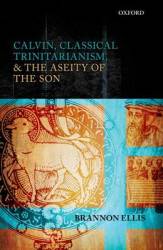
For much of his career as a Reformer John Calvin was involved in trinitarian controversy. Not only did these controversies span his career, but his opponents ranged across the spectrum of theological approaches-from staunch traditionalists to radical antitrinitarians. Remarkably, the heart of Calvin's argument, and the heart of others' criticism, remained the same throughout: Calvin claimed that the only-begotten Son of the Father is also, as the one true God, 'of himself'.
Brannon Ellis investigates the various Reformation and post-Reformation responses to Calvin's affirmation of the Son's aseity (or essential self-existence), a significant episode in the history of theology that is often ignored or misunderstood. Calvin neither rejected eternal generation, nor merely toed the line of classical exposition.
As such, these debates turned on the crucial pivot between simple unity and ordered plurality-the relationship between the processions and consubstantiality-at the heart of the doctrine of the Trinity. Ellis's aim is to explain the historical significance and explore the theological implications of Calvin's complex solidarity with the classical tradition in his approach to thinking and speaking of the Triune God.
He contends that Calvin's approach, rather than an alternative to classical trinitarianism, is actually more consistent with this tradition's fundamental commitments regarding the ineffable generation of God from God than its own received exposition. Review: I have learned a lot from Ellis book and I highly appreciate it ...
I recommend it warmly Georg Plasger, Journal of Reformed Theology The author's claim is that Calvin's autothean emphasis purifies such grammar, so making a significant contribution to Trinitarian theology. This erudite book will be of considerable interest to students of Reformed theology and (to a lesser extent) of Trinitarian theology more generally.
Paul Helm, Journal of Ecclesiastical History Brannon Ellis, throughout this book, has shown that he is surely such a theologian, in the very best and most helpful way. Ellis holds togetherbrilliantlyboth the depth and breadth of the issues, concerns, nuances, subtleties, and significant differences among a vast range of individual thinkers, movements, councils, and credal statements on the question of how the Son of God may be said to be a seof himselfyet also of the Father.
Robert C. Fennel, The Journal of Theological Studies Editor Ashford and company are commended for their efforts Mitchell Dick, Mid-America Journal of Theology
 Related Products
Loading similar products...

Stay informed about the best deals and price drops. Choose which notifications you'd like to receive from PriceCheck.


