
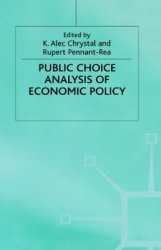

'Public choice' refers to a specific approach to the analysis of economic policy in which policy-makers are viewed as having their own objectives, much as consumers are assumed to maximize utility and firms to maximize profits. It could be, for example, that a government wants to maximize its chances of being re-elected, or that it wants to improve the well-being of its own supporters.
The key feature of this approach is that the outcomes of policy decisions are rarely socially optimal, and it thus provides a line of criticism of the putcomes generated by democratic policy-making institutions. The approach can be used to explain policy decisions. But it can also be used to show how the constraints and incentives imposed on policy-makers could be changed in order to generate socially desirable outcomes - such as handing monetary policy over to an independent central bank.
The chapters in this volume offer analyses of policy by proponents of the approach as well as critics of it.
 Related Products
Loading similar products...




Stay informed about the best deals and price drops. Choose which notifications you'd like to receive from PriceCheck.

Free easy-to-follow course for anyone in South Africa who wants to learn how to start a digital business.

