
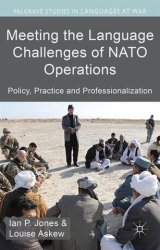

After 40 years of Cold War, during which it never carried out a 'live' operation, NATO suddenly found itself intervening in three conflicts - in Bosnia-Herzegovina, Kosovo and Afghanistan - where the ability to communicate with local officials and populations was essential to the success of the missions.
It was largely unprepared for this, leading to confusion and improvisation. This book explains how the Alliance responded to the language and cultural challenges it faced and how one man led efforts to reorganize and professionalize NATO's translation and interpretation support on the ground so as to ensure that the missions did not fail through lack of understanding.
The book contrasts these challenges with the situation during the Cold War period and outlines NATO's language policy and practices, including the growing dominance of the English language. It finally recounts how NATO eventually developed a coherent doctrine on linguist support for military operations.
 Related Products
Loading similar products...




Stay informed about the best deals and price drops. Choose which notifications you'd like to receive from PriceCheck.

Free easy-to-follow course for anyone in South Africa who wants to learn how to start a digital business.

