
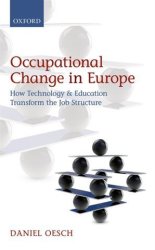

What types of jobs are growing: well-paid managerial jobs or low-paid auxiliary jobs, high-end professional jobs or bottom-end service jobs? Can occupational change transform affluent countries into enlarged middle-class societies? Or, on the contrary, are we heading towards a future of increasingly divided class societies?
Do changes in the employment structure allow forthcoming generations to move towards more rewarding jobs than those held by their parents - or is downward mobility the more likely outcome? This book throws new light on these timely questions by drawing on extensive evidence of employment data on the pattern of occupational change in Britain, Denmark, Germany, Spain, and Switzerland since 1990.
It documents the change in the employment structure, and examines the five underlying driving forces: technology, globalization, education, migration, and institutions. The book discusses whether governments really have no other choice than either occupational upgrading with soaring unemployment or full employment with expanding low-end jobs.
The book gives a clear picture of the future of work, skills, and employment in today's Europe, contributing to the debate in economic sociology and labour economics. Review: This thoughtful book considers the reasons why the distribution of jobs, from the highest paid to the lowest, changed over the past 20 years in five European countries, including Britain and Germany. --CHOICE
 Related Products
Loading similar products...




Stay informed about the best deals and price drops. Choose which notifications you'd like to receive from PriceCheck.

Free easy-to-follow course for anyone in South Africa who wants to learn how to start a digital business.

