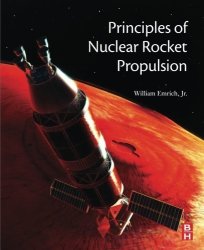

Principles of Nuclear Rocket Propulsion provides an understanding of the physical principles underlying the design and operation of nuclear fission-based rocket engines. While there are numerous texts available describing rocket engine theory and nuclear reactor theory, this is the first book available describing the integration of the two subject areas.
Most of the books emphasis is primarily on nuclear thermal rocket engines, wherein the energy of a nuclear reactor is used to heat a propellant to high temperatures and then expel it through a nozzle to produce thrust. Other concepts are also touched upon such as a section devoted to the nuclear pulse rocket concept wherein the force of externally detonated nuclear explosions is used to accelerate a spacecraft.
Future crewed space missions beyond low earth orbit will almost certainly require propulsion systems with performance levels exceeding that of todays best chemical engines. A likely candidate for that propulsion system is the solid core Nuclear Thermal Rocket or NTR. Solid core NTR engines are expected to have performance levels which significantly exceed that achievable by any currently conceivable chemical engine.
The challenge is in the engineering details of the design which includes not only the thermal, fluid, and mechanical aspects always present in chemical rocket engine development, but also nuclear interactions and some unique materials restrictions.
 Related Products
Loading similar products...

Stay informed about the best deals and price drops. Choose which notifications you'd like to receive from PriceCheck.


